
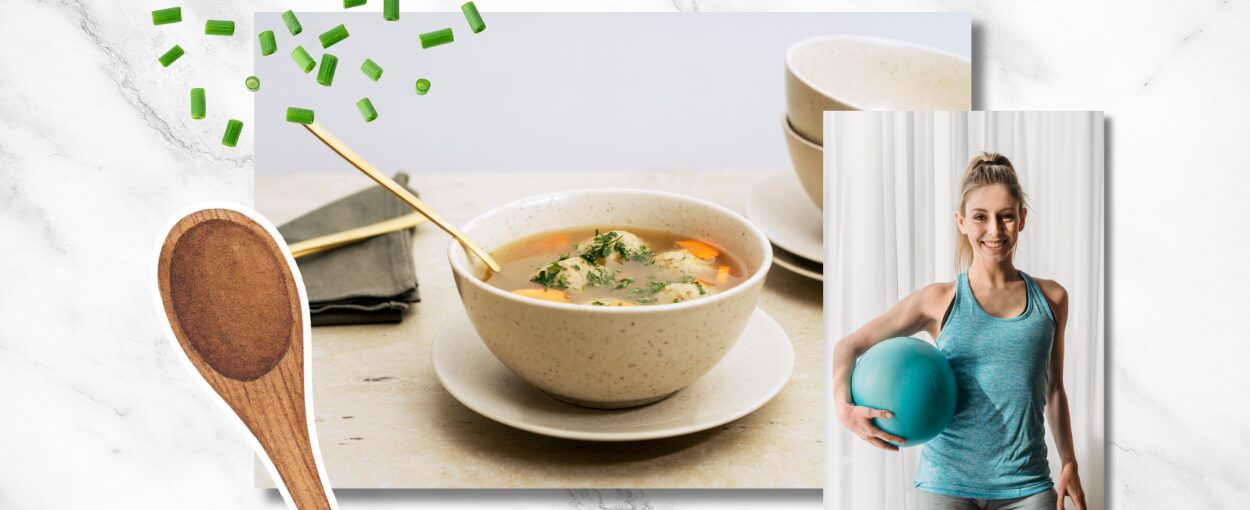
Bone broth is having a moment. The once-humble kitchen staple is taking centre stage, praised for everything from glowing skin to healing the gut.
But before we splash out on pricey cartons or simmer endless pots on the stove, is bone broth really worth the hype? Or is it just another food fad dressed up in collagen-coated marketing?
For women in midlife, the conversation gets especially interesting. As oestrogen levels dip, joints start to feel stiffer, digestion more sensitive, and skin a little less bouncy. With its mix of protein, collagen and minerals, bone broth promises to help on all three fronts. But what’s the truth?
What actually is bone broth (and how is it different from stock)?
At first glance, bone broth might look a lot like the stock you’d use as the base of a soup or stew. But, while stock usually cooks for just a couple of hours, bone broth is left to bubble gently for much longer, often 12 to 24 hours.
Candice Van Eeden, holistic nutrition coach at Kuon Healthcare explains the process.
“Bone broth is produced by simmering animal bones and connective tissue in water over an extended period of several hours, along with a splash of vinegar,” she says. “This is how bone broth’s nutritional value is created.”
That splash of vinegar isn’t for flavour – it helps draw minerals into the broth, giving it the nutrient profile that’s earned it so much attention. The result is a thicker, silkier liquid rich in gelatin (a cooked form of collagen), which sets into a wobble once cooled.
It’s also nothing new. From traditional chicken soup remedies to Asian and Mediterranean cooking, bone broth has been a dietary staple for centuries.
The nutrient profile: what’s really inside the pot
What you get in your bone broth depends on the bones used and how long you simmer. But, in general, it can be a rich source of nutrients. A recent study looked closely at the composition of bone broth. Researchers found that it contains amino acids such as glutamine, glycine, proline, histidine and arginine, plus essential minerals like calcium, phosphorus, potassium, magnesium, and zinc.
Many of these compounds have huge benefits for midlife and beyond:
- Collagen peptides/gelatin help support skin, joint and connective tissue resilience.
- Glutamine, glycine, proline, histidine, and arginine are amino acids that play roles in tissue repair, gut barrier support, anti-inflammatory pathways and more.
- Minerals like calcium, magnesium, phosphorus, potassium and zinc are central to bone strength, muscle contraction, nerve signalling, and numerous enzymatic reactions.
Because bone broth is simmered for an extended period (often 12 hours or more), more of these nutrients leach into the liquid. This is what distinguishes it from a typical stock.
A deep dive on the benefits
So, does sipping a mug of bone broth actually translate into midlife health perks? The research on bone broth itself is still fairly limited, but its key nutrients gives some useful clues.
Gut health
A happy gut means better digestion, fewer food sensitivities, and more efficient nutrient absorption, all of which are valuable as our bodies change through midlife. Bone broth contains amino acids like glutamine and glycine, which can help soothe and repair the intestinal lining.
“The collagen helps repair and support the lining of the digestive tract, which improves intestinal barrier function,” Sarah Carolides, functional nutritionist and head of nutrition at Zooki explains. “Essentially, it reduces the risk of leaky gut and allows for better nutrient absorption.”
It’s early days in terms of clinical trials. In theory, the amino acids and gelatin in bone broth could support gut resilience, especially for those who notice digestion becoming more sensitive with age.
Joint support
Stiff hips, creaky knees and tendon niggles often become more common in our 40s and 50s. That’s no coincidence: oestrogen directly stimulates collagen production, so when levels decline, tissues lose some of their natural elasticity.
“The loss of oestrogen production during midlife is the reason why women in their 40s and 50s have the highest rate of joint injuries and problems such as tennis elbow, Achilles’ tendon and so on,” Sarah notes. “Bone broth can help provide collagen peptides and has been shown to support tendon and ligament injuries.”
Skin elasticity
Collagen isn’t just about joints. As levels decline, we also see changes in skin firmness and hydration. While bone broth isn’t a miracle wrinkle-eraser, its collagen and amino acid profile can contribute to the building blocks needed for skin repair and elasticity.
Some studies, such as this paper from 2022, indicate improvements in skin hydration and smoothness after regular collagen supplementation. Whether bone broth offers the same degree of benefit remains to be proven, but as part of a varied, nutrient-dense diet, it can definitely play a supporting role.
Homemade vs shop-bought: does it matter?
One of the biggest questions around bone broth is whether it’s worth splashing out on the ready-made cartons that line wellness shop shelves. Making your own can definitely save a few pennies if you have the time.
“Making it yourself is surprisingly easy and involves getting to eat a roast dinner, which is always a plus in my books,” says nutritionist Michaella Mazzoni. “It’s also cheaper and you know what you’ve got in front of you with no preservatives, and you know it’s been slow cooked long enough to get the benefits.”
At its crux, bone broth is just bones and water. Next time you do a roast, save the carcass and add it to a simmering pot, cover it with water and add a splash of vinegar. Leave it in the oven to gently bubble away for as long as possible. You can even add some veggies if you want to amp up the flavour and the nutrition.
That said, shop-bought broth definitely has its place. Look for broth from organic, grass-fed farms for a helpful shortcut on busy weeks. These are ideal when you don’t have the time (or inclination) to simmer a pot for 12 hours.
How to add bone broth into a midlife-friendly diet
You don’t need to sip it from a steaming mug (unless you want to). Bone broth is easy to fold into everyday meals:
- Soups and stews – the classic way to build depth and richness.
- Cooking grains – swap water for broth when making rice, quinoa or lentils.
- Risottos and curries – adds both flavour and extra nutrients.
- Sautéing veg – a splash of broth instead of oil for a lighter option.
- Freezer stash – freeze in ice cube trays for instant flavour bombs.
The takeaway?
Bone broth isn’t a miracle cure, but it can be a simple, nourishing addition to midlife nutrition. Whether homemade or shop-bought, it’s an easy way to top up on collagen peptides, minerals and gut-friendly amino acids, with benefits that target the very systems many of us want to support as we age.
Sometimes, the old remedies really do stand the test of time.