
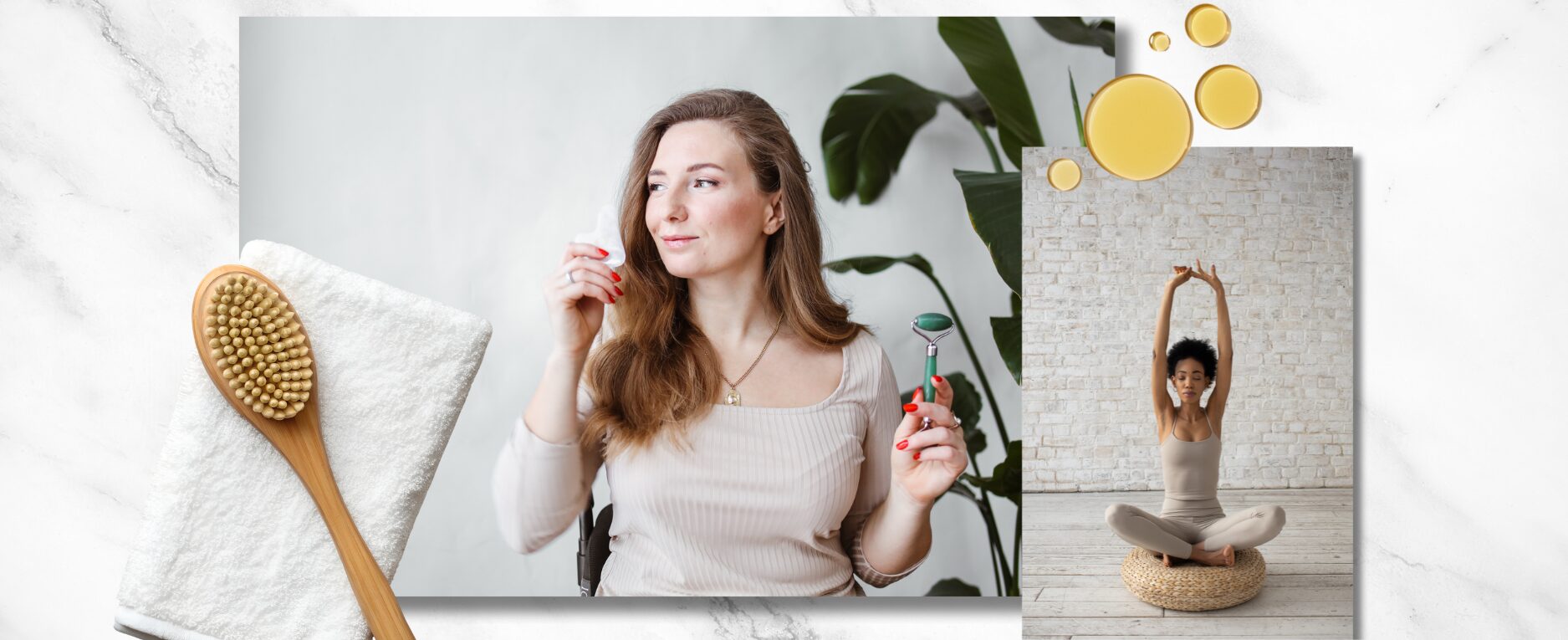
Feeling puffy, bloated or just generally uncomfortable? From swollen ankles to tired eyes, poor circulation can leave us feeling far from our best. And sometimes, simply drinking more water isn’t enough to fix it.
But forget cold plunges or relentless body brushing – I decided to test two gentler, circulation-boosting approaches: a targeted yoga sequence and a de-puffing gua sha routine. The aim? To encourage lymphatic drainage and reduce that heavy, sluggish feeling. Here’s what happened.
Yoga for lymphatic drainage
According to yoga teacher and writer Sarah Highfield, yoga is a powerful tool for supporting the lymphatic system, thanks to the way it encourages movement, breath, and gentle compression.
“Certain poses are especially beneficial in stimulating the lymphatic system, which relies on muscular movement and gravity to function efficiently,” she explains.
Sarah recommended four simple poses to help support circulation:
- Legs-up-the-wall (Viparita Karani): A deeply restorative inversion that allows gravity to help drain lymph and blood from the legs back toward the heart – soothing swelling and blockages.
- Downward-facing dog (Adho Mukha Svanasana): This full-body pose encourages fluid flow toward the heart, supporting circulation and gentle detoxification.
- Seated spinal twist (Ardha Matsyendrasana): Twists help massage the internal organs and move lymph through the digestive system.
- Cat-cow (Marjaryasana-Bitilasana): This flowing movement opens the chest and abdomen, where many lymph nodes reside, to enhance flow and release tension.
Did it work?
I’m already a yoga devotee, but I’d never really connected the dots between stretching and lymphatic health. While all the poses felt soothing, legs-up-the-wall was the real game-changer. My legs felt noticeably lighter, my breath slowed, and my whole body softened. There was a genuine sense of relief; as though gravity had given my circulatory system a much-needed helping hand.
Gua sha for lymphatic drainage
If, like me, you’ve got a jade roller or gua sha gathering dust in your beauty drawer, this might be your sign to pick it up again.
I spoke to renowned facialist and gua sha trainer Donna Ryan for expert guidance.
“Gua sha is often described as a lymphatic drainage tool, but technically it’s a fascia treatment,” she explains. “Fascia is our body’s connective tissue and it houses the lymph vessels. So when we glide a tool gently over the skin, we release restrictions in the fascia, create space, and support natural lymph flow.”
This is why gua sha is so effective at reducing puffiness, especially when we use it to work with the body, not just the face. “Lymph doesn’t drain in isolation,” says Donna. “It flows from the face down through the neck, collarbones, armpits and eventually to the thoracic duct. Breathwork, movement, and tools like gua sha all help to stimulate this process.”
Here’s the simple sequence Donna gave me to follow:
- Glide down the sides of the neck to the collarbones
- Sweep from chin to ear
- Gently stroke under the eyes
- Lift from brows to hairline
- Use light, slow pressure – no dragging or tugging
Did it work?
This one felt instantly effective. The gua sha seemed to release tension not just in my face, but all the way down through my neck. My complexion looked fresher, a little brighter, and definitely less puffy. It was easy, calming, and something I actually looked forward to repeating the next day.
The surprising takeaway
Both Sarah and Donna independently recommended one surprisingly simple practice to supercharge results: deep, diaphragmatic breathing.
“Deep belly breathing creates internal pressure shifts that support lymph flow,” Sarah explains. “Combined with movement, it encourages the body’s natural detox processes, reduces puffiness, and even supports immune function.”
Donna agrees: “Incorporating slow, intentional breathing into your gua sha practice helps encourage drainage, and brings a moment of calm into your day, too.”
The verdict
If you’re after quick, visible results, gua sha is a wonderfully soothing way to start or end the day. But if long-term lymphatic health is your goal, both yoga and facial massage, paired with mindful breathing, make a powerful duo. The key? Consistency, not intensity. A few simple steps, repeated regularly, can go a long way in helping you feel lighter, brighter and more balanced.